Happy March! Just like that, another month has begun and spring is just around the corner. It’s been an enjoyable winter for me here at home in Ottawa. There’s been great snow conditions this year for cross-country skiing and I’ve been really loving getting out in the woods whenever I’ve had the chance. In some ways, I’ll actually be sad to see all the magical snow disappear this year BUT this will also mark the beginning a new spring migration season that I’m very excited for once again.
Speaking of excitement, at the end of last summer, I received an email from Birds Canada that was probably the most exciting moment of my photography career to date; they selected one of my photos to be featured in their 2026 calendar!
I'm thrilled to be part of this calendar as it's one of Birds Canada's most important annual fundraisers and helps to support bird research and conservation across the country. Last spring I was lucky enough to have had the opportunity to visit the Birds Canada headquarters in Port Rowan, ON, and their Long Point Bird Observatory on Lake Erie. I was blown away to see the work this organization is doing and it was spectacular to witness their dedication to conservation and research first hand. It truly is an honour to be featured in their calendar.
Gadwall in the Cataraqui River - Beyond the Photo
Every year, Birds Canada runs a photo contest where it selects winning photos of birds in Canada to feature in their upcoming calendar for the following year. When I shared the news with my friends that I had a winning image, they could clearly tell how excited I was. This was more or less how many of the conversations went with my non-birder friends:
Friend: “Wow! Congratulations! What species of bird was it?? Something super rare??”
Me: “Thank you so much! Actually not that rare, you definitely don’t see them everyday, but they are around depending where you look. It’s called a Gadwall.”
Friend: “Cool! I’ve never heard of a Gadwall! What does it look like?”
Me: “It’s a grey duck with very subtle and beautiful patterns.”
Friend: “Oh. Huh…Interesting. So you won a contest with… a photo of a grey duck?”
Yes. My winning image was of a grey duck. A Gadwall. A duck that could easily be mistaken for being “just another mallard”, or even worse, a duck most people wouldn’t even think twice to look at. I know this was true for myself not even that long ago. If I had come across this duck a few years ago I probably wouldn’t have even registered it in my brain. In some ways, I think that contributed to making this contest win feel even more special to me.
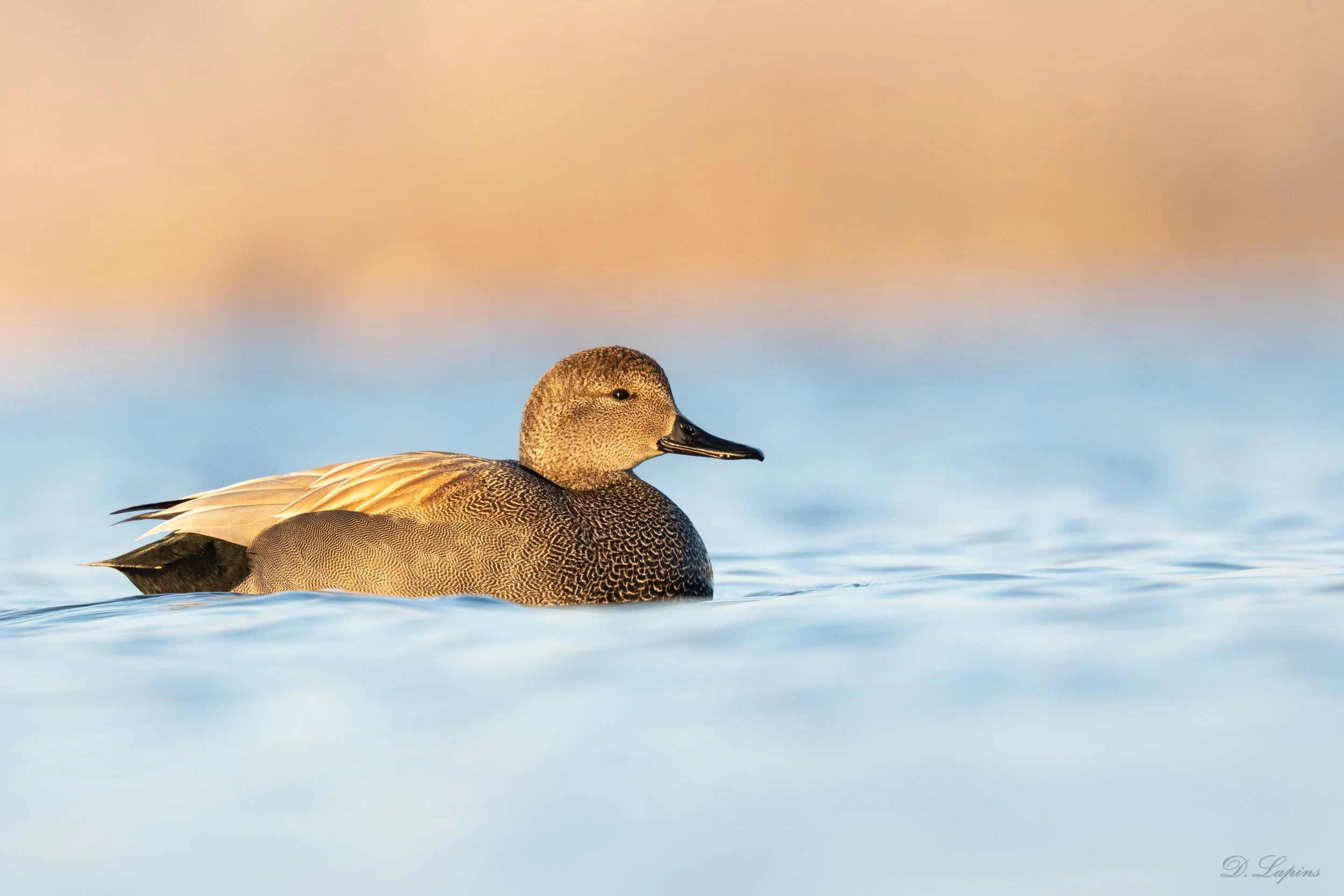
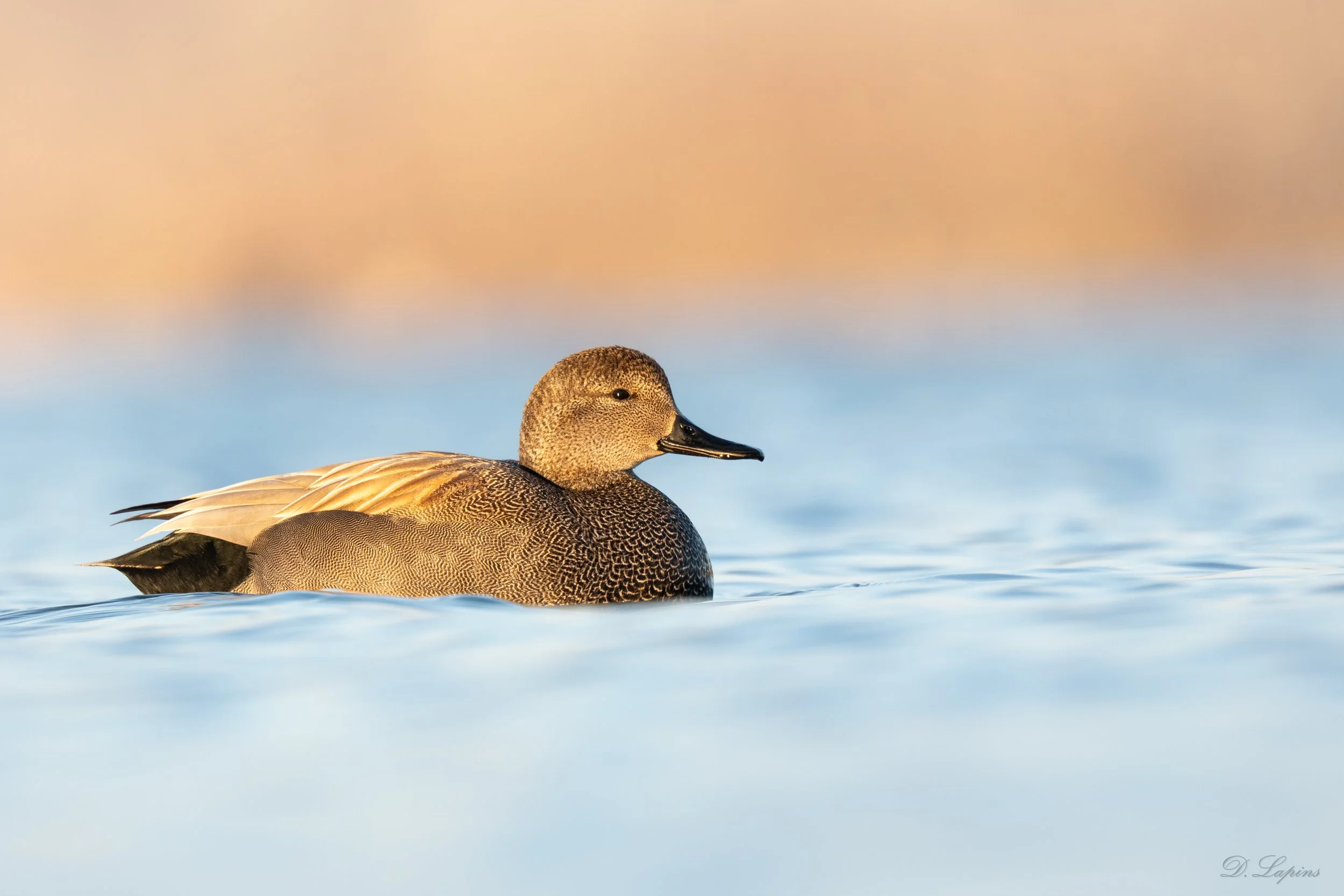
Male Gadwall in the Cataraqui River - Kingston, ON. Featured in Birds Canada’s 2026 Calendar for the month of March.
I took this photo of a male Gadwall in March of 2025, along the shores of the Cataraqui River close to the Kingston Rowing Club. Unlike many other male ducks of different species, Gadwall males don’t have bright and flashy breeding plumage - their subtle look actually helps them blend into wetlands. To me, this image represents so much more than just a picture of a grey duck. It represents the appreciation that I’ve gained for the often overlooked beauty in nature - something that has grown within me since picking up photography.
My dad and I were on our way to Kingston, where I’d be competing in a water polo tournament, after leaving from Ottawa earlier in the day. We had taken our time on the drive (as we usually do) and stopped along the way to check out the Kingston Mill Locks, the southerly most locks of the Rideau Canal system. We stopped and walked around the locks, looked for birds, and I took a few photos of some of the falls there.
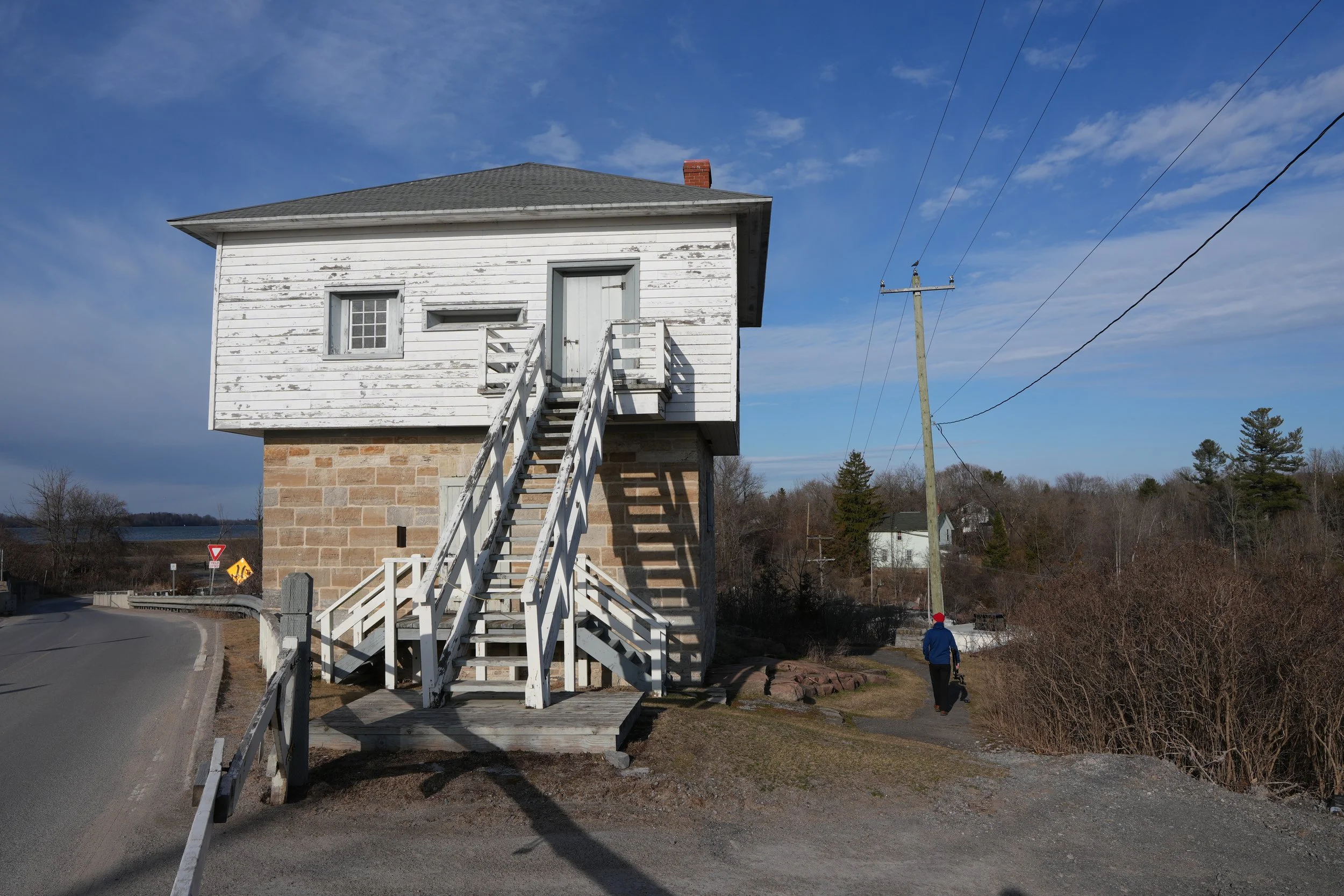
Kingston Mills Blockhouse. The Blockhouse is associated with the defence of British North America against American privateers. Military blockhouses were built in support of the Rideau Canal's defence function. Since Kingston Mills Lockstation is located at the southern entrance to the canal system, its blockhouse was a key defensive structure for the whole canal, and was one of the first constructed. It was designed to accommodate regular troops and militia assigned to protect the lockstation (Parks Canada).
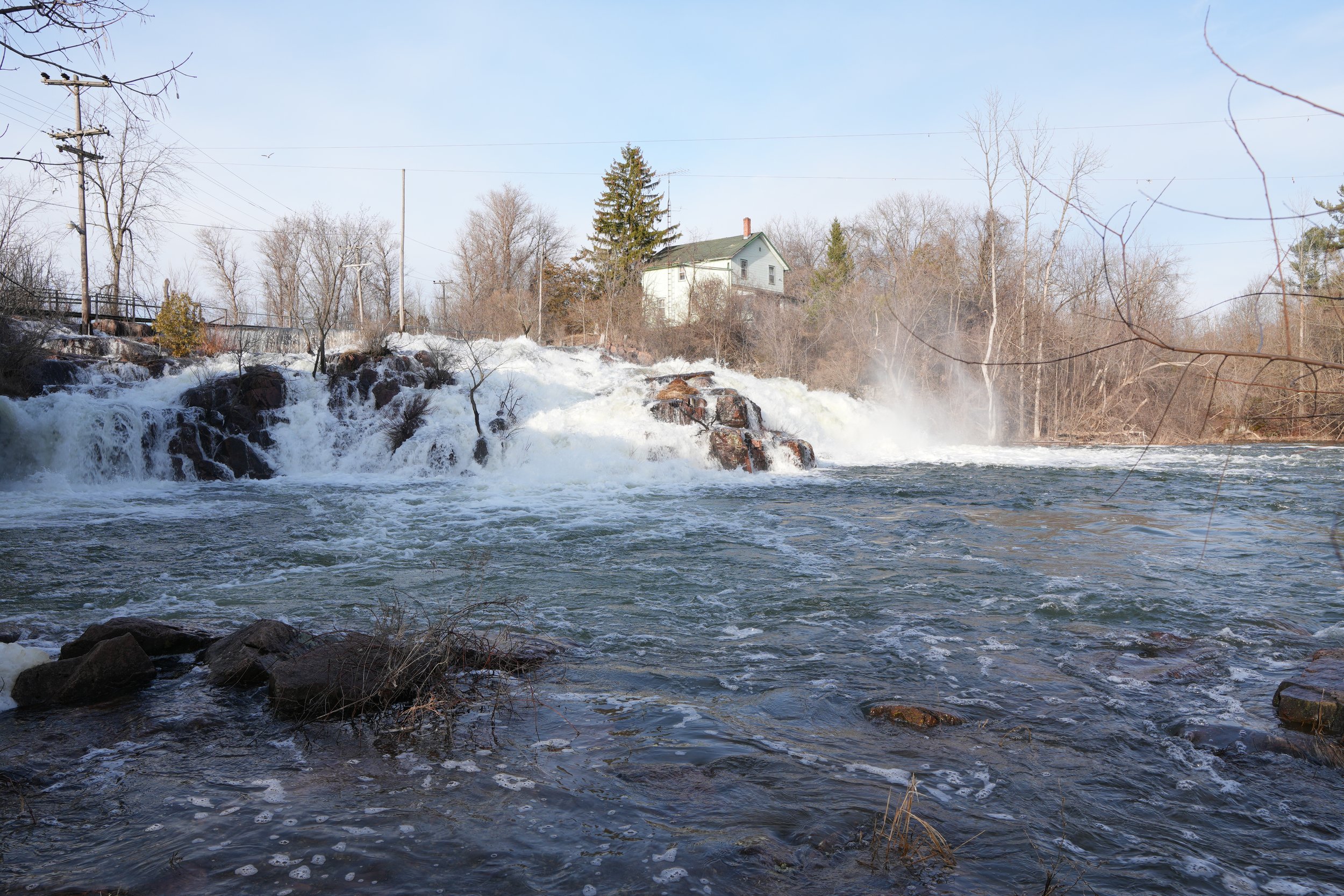
Falls below the locks.
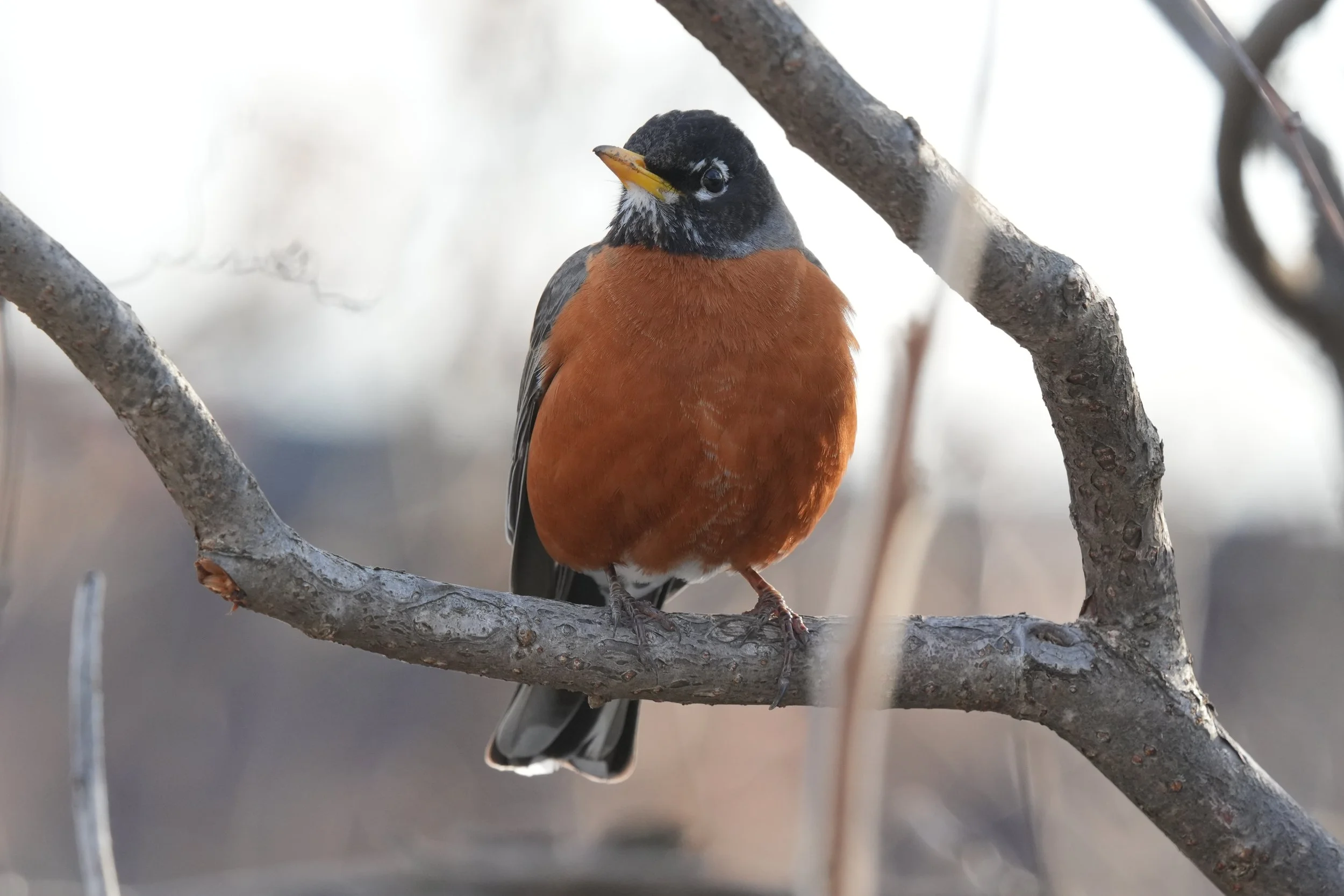
Spring was in the air with Robins becoming a more frequent sighting.
It was already well into the evening by the time we were done walking around the locks, with not much time left until sunset. We carried on south into Kingston, making one more stop along the Cataraqui River, near Doug Fluhrer Park, before checking into our AirBnB in downtown Kingston.
By this point, the sun was pretty low with only a few minutes until it would be completely behind the horizon. We were walking along the K&P trail along the water where we saw a beaver, some swans, buffleheads, and other interesting waterfowl before stumbling across the Gadwall. I had only photographed these from a distance before (actually earlier that winter in Kingston as well, at the Invista Pond lagoons) - this one was swimming fairly close so I was eager to get some more detailed photos of one.
I was able to get right down to water level with my camera - with the sun’s setting rays shining perfectly onto the Gadwall, I was able to get the shot I was hoping for. The distant background of the opposite shoreline helped to create a nice, clean and out of focused background. The light from the setting sun hitting the trees on the opposite shoreline resulted in some nice warm colouring in the background as well to contrast the cold blue water. I was amazed of the subtle yet intricate details of the feathers when initially reviewing the photo on the back of my camera screen. Both my dad and I were super excited with the photos that we got - little did we know at the time that one would be published a year later in the Birds Canada calendar!
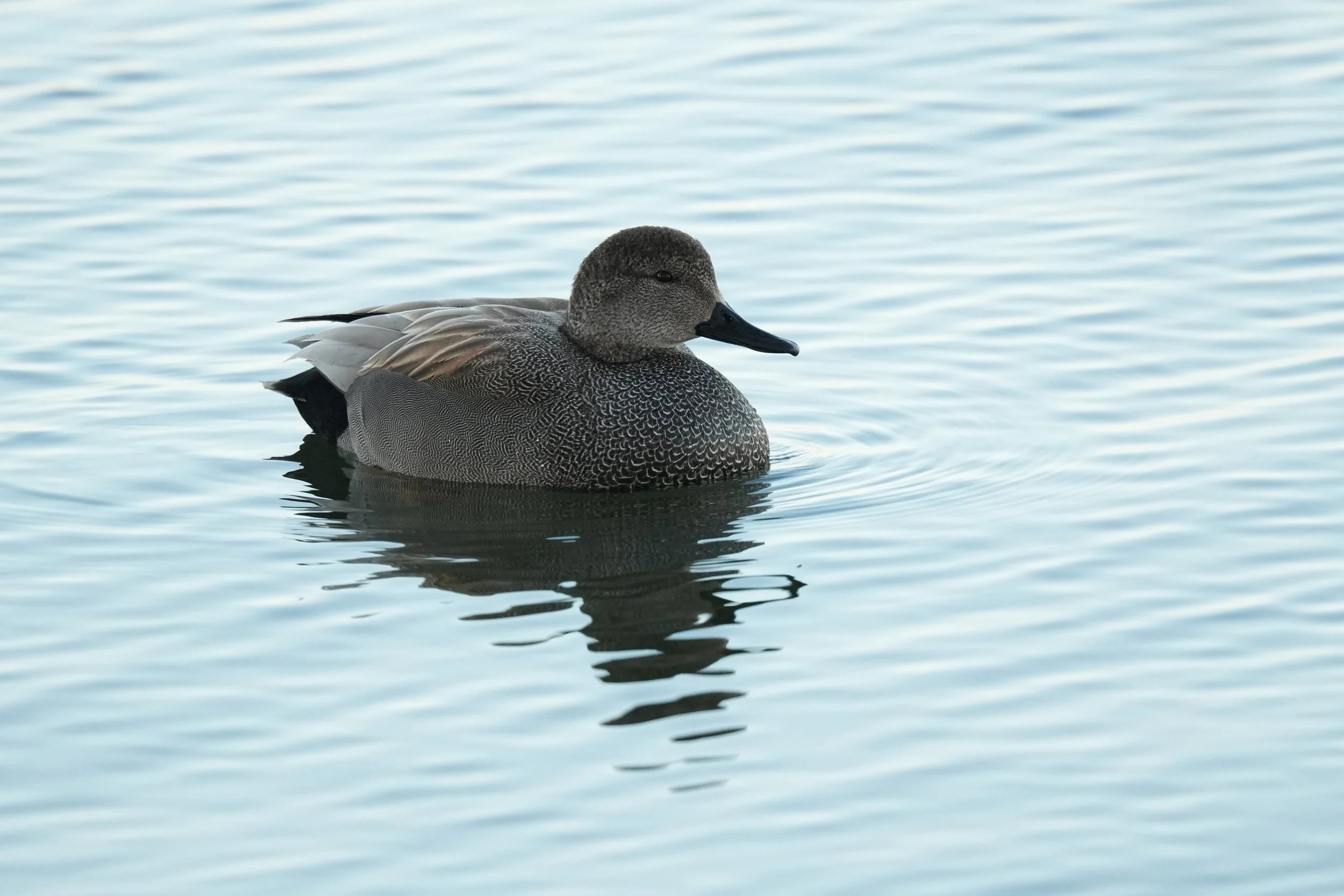
The same Gadwall, but taken while standing on the trail looking down at the duck while it was in the shade. I think this image demonstrates the difference in photo quality that you can get of the same bird depending on your point of view. By getting low to eye level, like in my winning photo, it creates a much more personal feeling with the bird while it also helps to create that nice clean, non-distracting back ground with a nice depth of field, giving the image a more 3-dimensional feel. Also by waiting for it to swim back out of the shadows and back into the golden hour sunlight allowed for some nice contrasted lighting on it’s feathers that really made all the details stand out more.
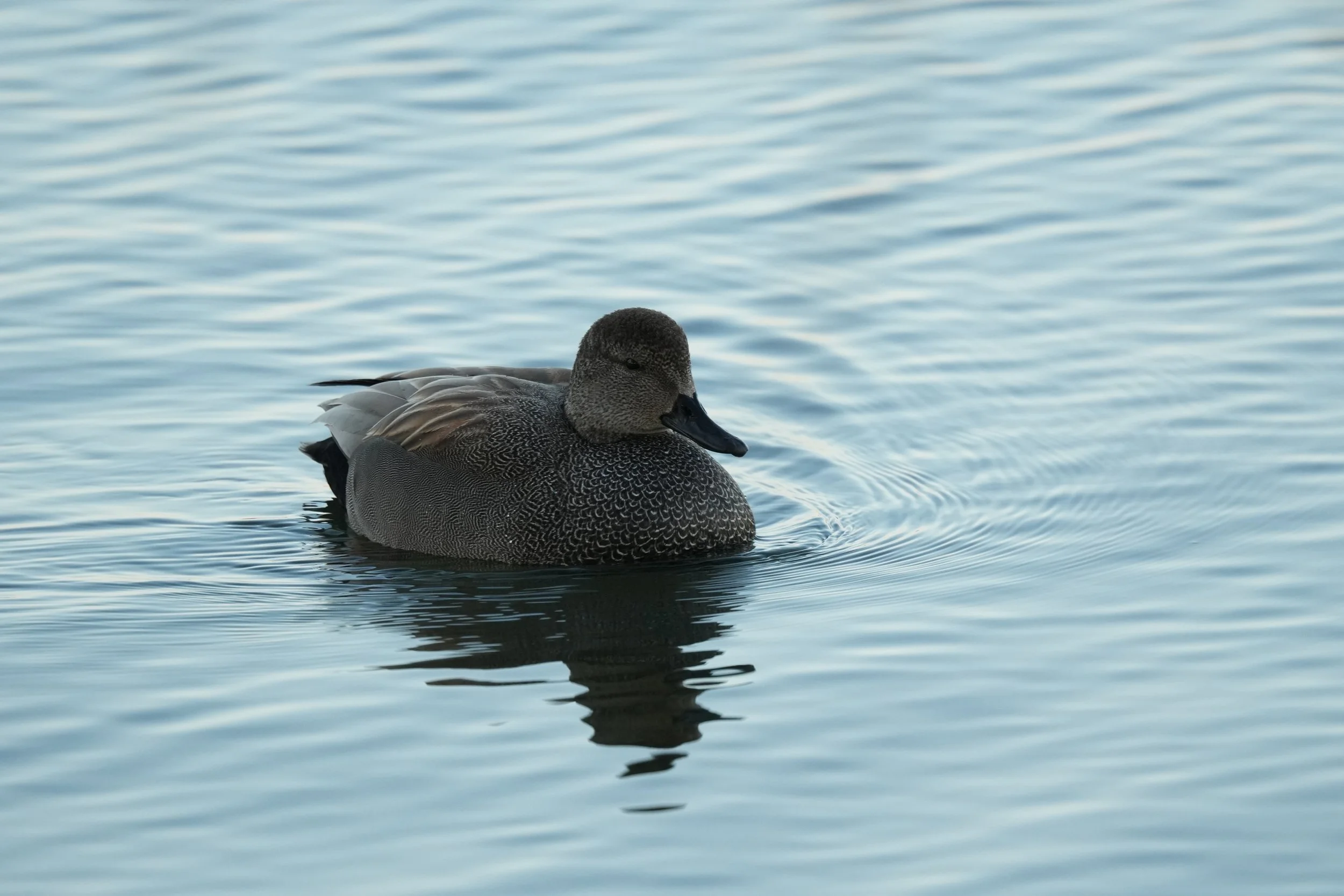
Same bird, different angles and lighting. Both taken within only a few minutes of each other.
Gadwalls breed across much of North America, Europe, and Asia. They winter mostly north of the tropics in the southern United States, Mexico, and coastal estuaries. They are commonly found along Lake Ontario, particularly in shallow bays and wetlands, often arriving during migration. Interestingly, Gadwalls are dabbling ducks but are known to be a bit of a “pirate” in the duck world, as they often snatch food from diving ducks as they surface (a behavior called kleptoparasitism). They are an adaptable duck and, in a time of dramatically decreasing bird populations worldwide, Gadwalls have actually been seeing an increase in numbers in North America since the 1980s with the help of conservation efforts.
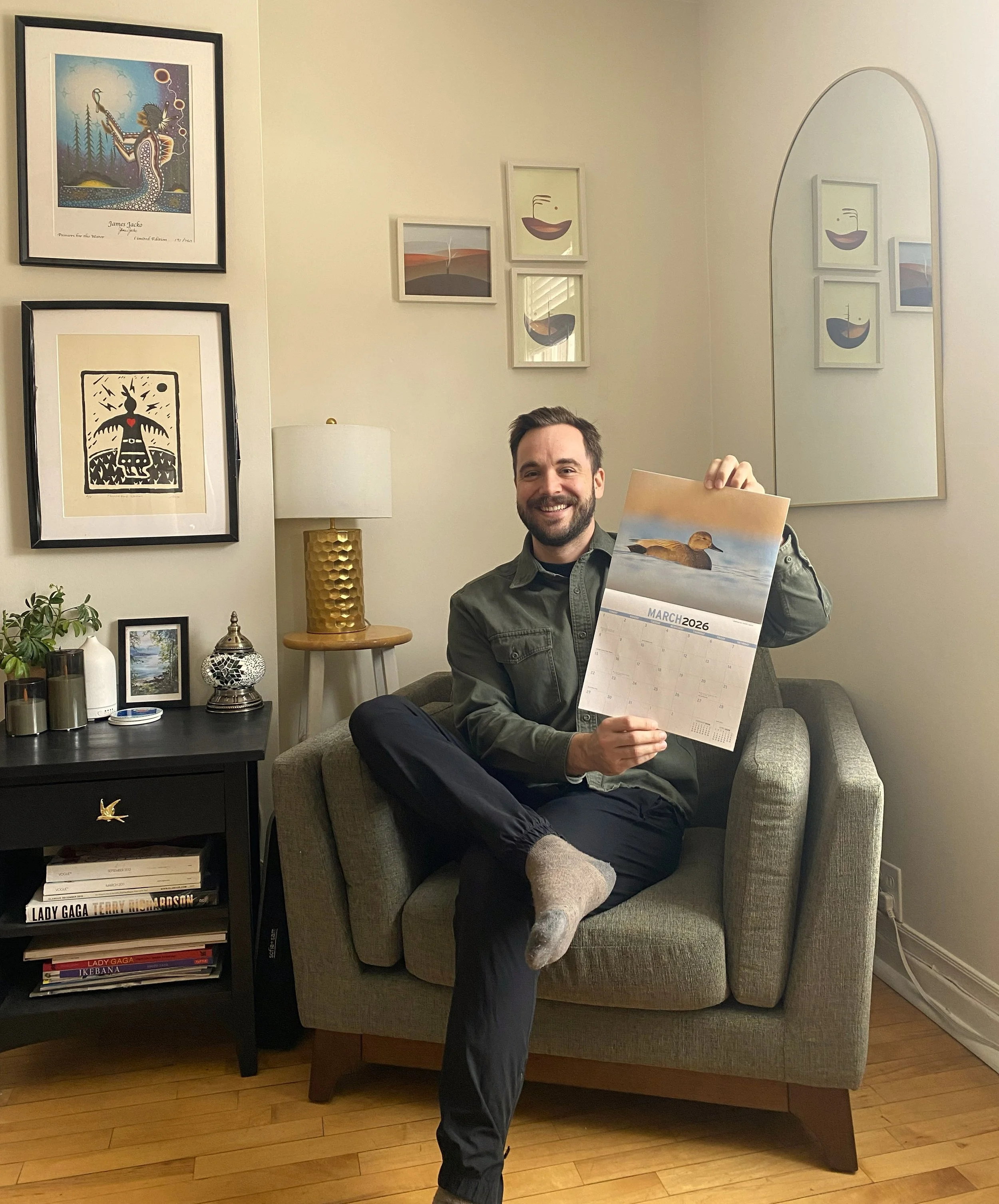
Happy with my new calendar - thanks, Birds Canada!
Thanks again to Birds Canada for featuring this amazing little grey duck in the 2026 calendar with my photo and for sending me a few copies. It really has meant the world to me! I look forward to filling 2026 with many more birding adventures and learning as much as I can about these amazing creatures.
